
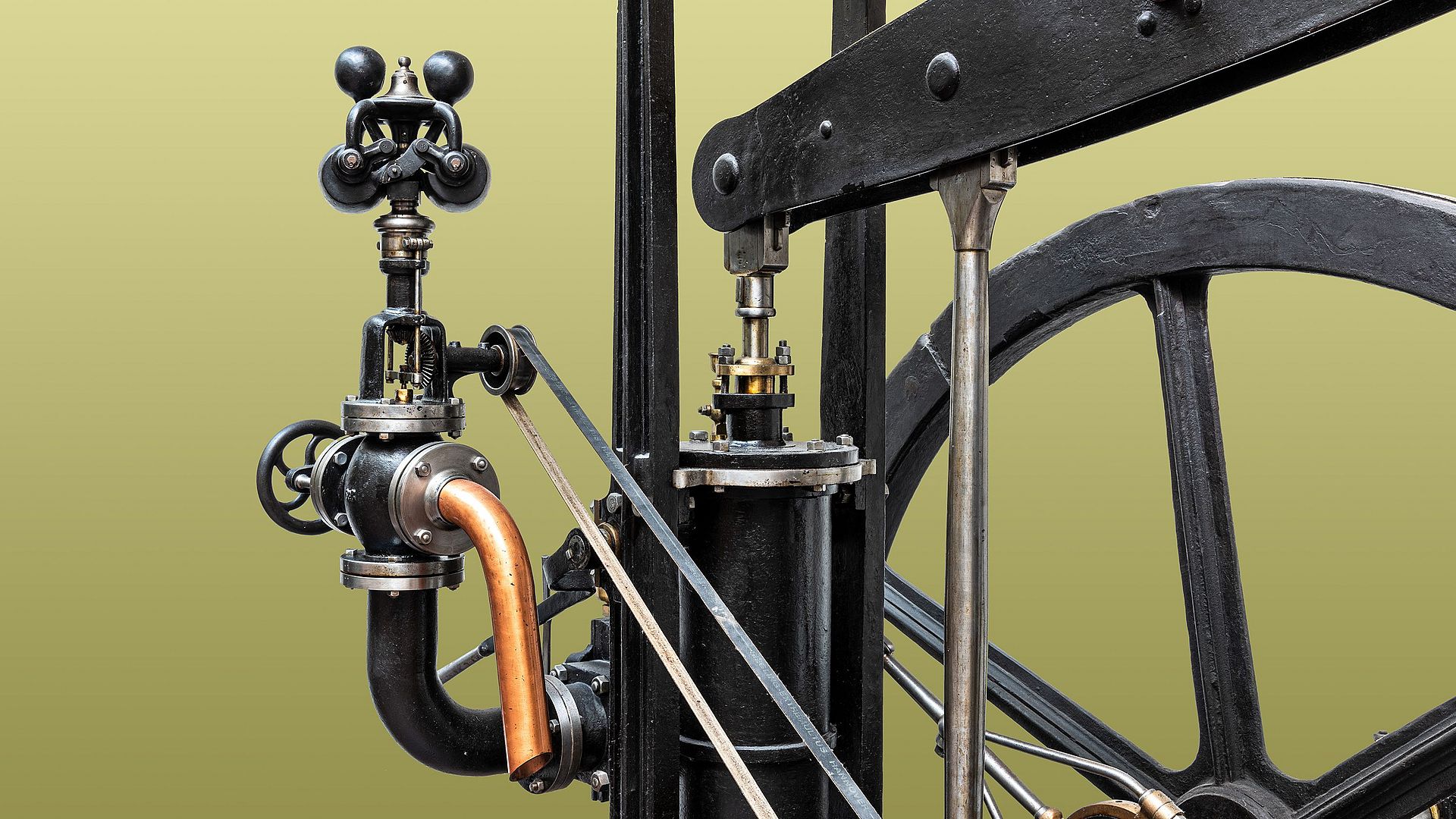
Photo: Deutsches Museum | Christian Illing
Materials Energy Production
Power Machinery – Machines move the World
How have motors changed the world? Discover the first and most successful power machines in history.
What is Power Machinery?
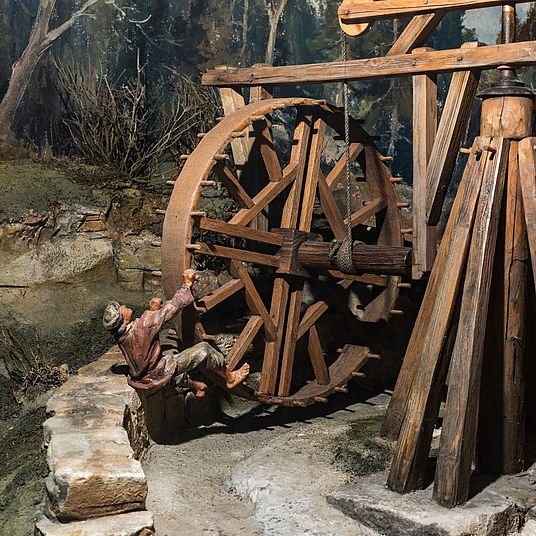
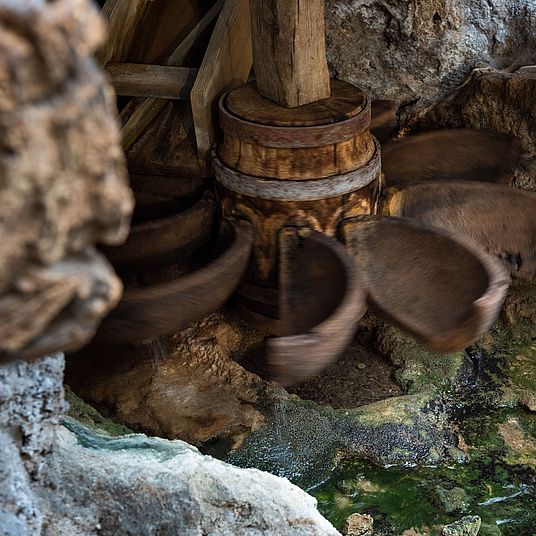
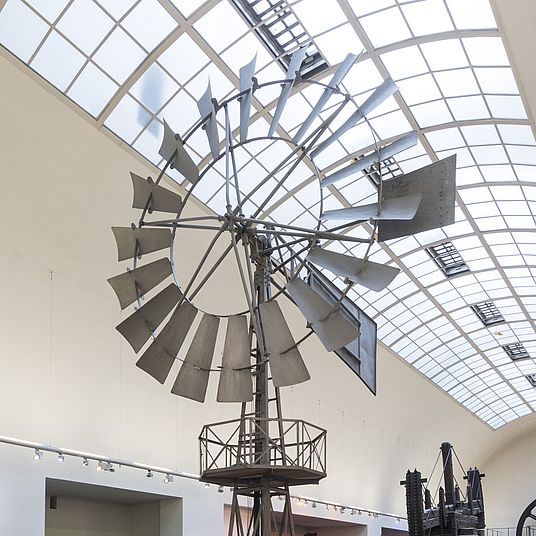
“Power machine” is another word for motor. This exhibition features a wide variety of historic power machinery, from treadmills moved by muscle power, water wheels and windmills to large steam engines.
55complete steam engines (including functional models) are included in the collection.
19machines (three as models) are currently on display at the exhibitions.
12machines can be seen in action during regular demonstrations.
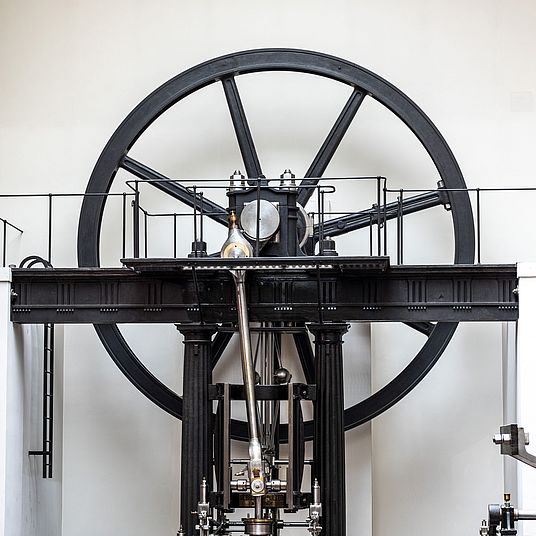
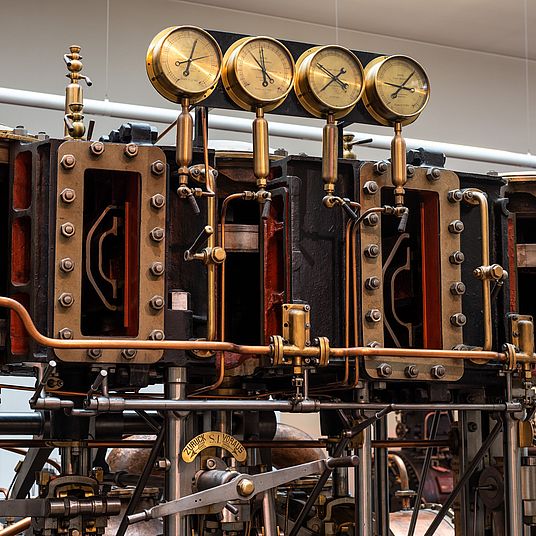
“The time will come when people will travel in stages moved by steam engines, from city to city, almost as fast as birds fly – fifteen or twenty miles an hour. Passing through the air with such velocity, changing the scene in such rapid succession, will be the most exhilarating exercise.”
Inside the Power Machinery Exhibition
Brief Tour through the Power Machinery Exhibition
In this video, museum employee Karl Ravens guides you through the Power Machinery exhibition. He shows 10-year-old Amelie the highlights of the exhibition. (Running time: approx. 30 minutes)
Virtual Tour
Discover the exhibition in 360°: click the mouse or touch the screen to look around in all directions. The virtual tour also includes text, films and audio information for many of the exhibits.
Virtual Tour through the Power Machinery Exhibition
Team Power Machinery
Sandra Maria Frank
Scientific Associate
Exhibition project "Energy – Steam"Dr. Panagiotis Poulopoulos
Scientific Associate
Exhibition project “Energy”Thomas Röber
Curator
Power Machinery, Agricultural and Food Technology Department